
1. Measurement period before slaughter
We recommend a minimum of 14 days of measurements leading up to the last feeding day before slaughter. This provides a solid data foundation and ensures stable and representative measurements over time.
2. Current and current direction
To optimize the placement of the Bioscope, we recommend installing it parallel to the main current direction. This is because we have found that this orientation provides better coverage of the fish school while also minimizing excessive movement and potential interference with the net wall.
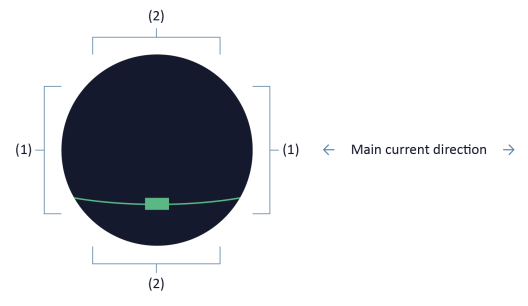
(1) indicates areas where the net wall typically experiences more movement.
(2) indicates areas where the net wall is generally more stable and experiences less movement.
3. Recommended depth placement
The bioscope generally delivers the highest number and best-quality measurements when placed at a depth of 6–12 meters.
-
A good starting point is to place the bioscope at 9 meters depth
-
Adjust depth if conditions such as light, visibility, or fish behavior require it
-
Ensure the bioscope is positioned to capture a representative sample of the fish in the cage, ensuring optimal precision and measurement quality
4. Stability and angle (pitch and roll)
For optimal measurements, it is important that the bioscope is correctly positioned and aligned.
-
If pitch or roll values exceed ±10 degrees, the equipment should be adjusted
-
Adjust the bioscope to achieve a stable and correctly aligned position
- The bioscope is tilted - what should I do?
5. Good visibility and clean lenses
Clear visibility is crucial for accurate measurements.
-
Ropes, nets, sea cables, or other equipment must not block the camera’s field of view
-
Remove any obstacles if possible, or adjust the placement of the bioscope
-
-
The lenses must be kept clean and free from biofouling and dirt
-
If necessary, gently wipe the lenses using a clean microfiber cloth or soft paper
-
Avoid using rough cloths or chemicals, as these may damage the lens surface
-
6. Lighting conditions and placement
Lighting has a significant impact on image quality.
-
In cages with artificial lighting or during periods of strong sunlight, the bioscope should be placed with its back facing the light source
-
This reduces backlighting, reflections, and contrast issues in the images
7. Use the web portal actively
The web portal is an important tool for ensuring measurement quality.
-
Regularly review images to assess placement, visibility, and potential obstructions
-
Persistently poor image quality may indicate the need for cleaning or repositioning
-
Stable operation results in better data series and more reliable analyses
Experiencing few or no measurements?
If you experience few or no measurements despite following the recommendations above, please refer to the article:
The bioscope registers few or no measurements – what can I do?